Torah Reading: Understanding Judaism's Living Tradition
A clear introduction to Torah reading — what it is, where it comes from, how it works, and why it remains at the heart of Jewish life. Whether you are new to Judaism or looking to deepen your understanding, this guide will walk you through the essentials — and if you want to practice, iTorah.life offers free online Torah reading with a complete digital Tikkun.
Click here for a deeper dive into Torah Reading Traditions, History, and How a Torah Is Written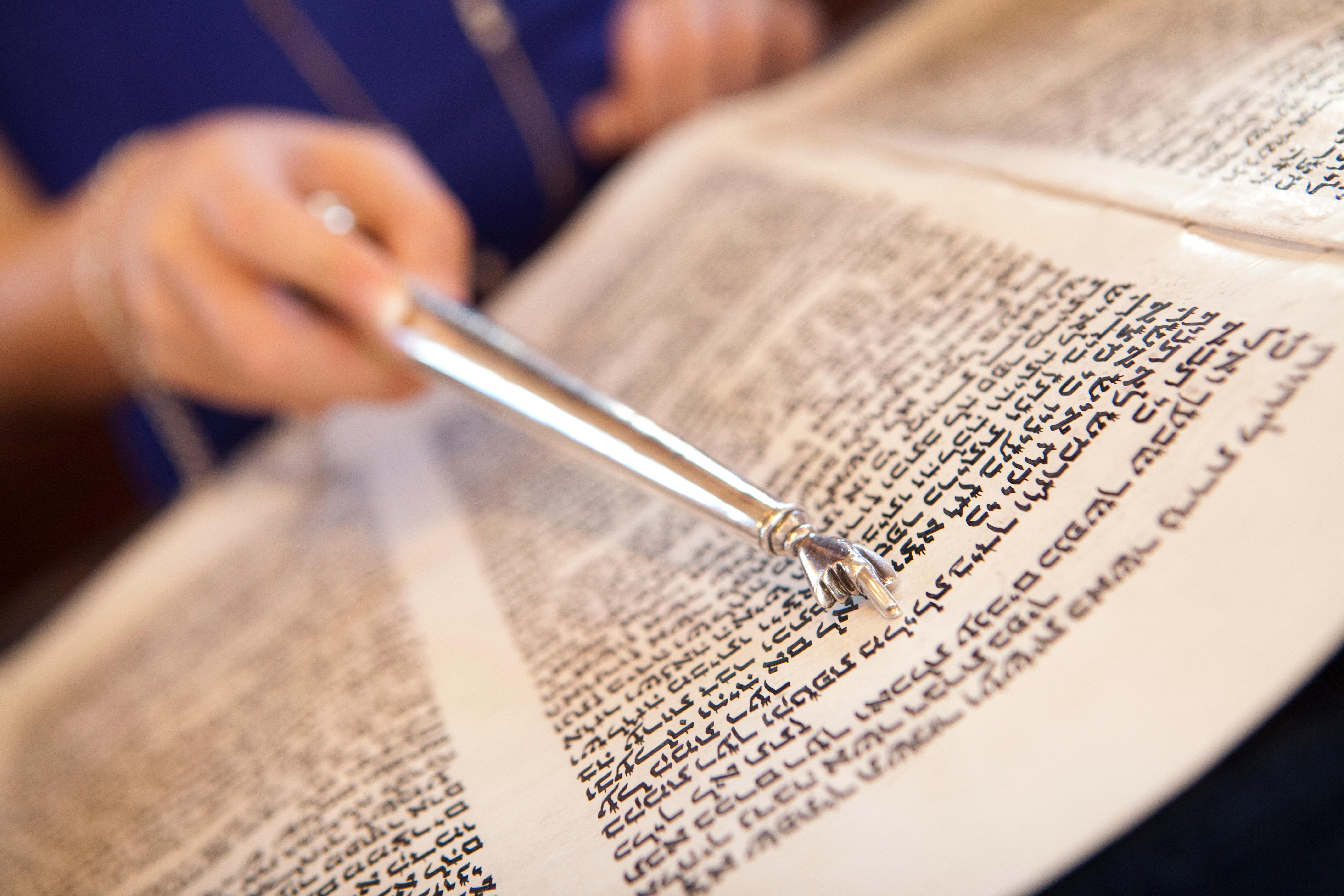
What is Torah reading?
Torah reading (Kriat HaTorah) is the public chanting of passages from the Torah — the first five books of the Hebrew Bible, also known as the Five Books of Moses. These books are Genesis, Exodus, Leviticus, Numbers, and Deuteronomy. Together they contain the foundational stories, laws, and teachings of the Jewish people.
In synagogue, a handwritten scroll is taken from a special cabinet called the ark (Aron Kodesh). A trained reader chants the Hebrew text aloud using an ancient system of melodies. Members of the congregation are called up to the reading table to recite blessings before and after each section — an honor called an aliyah.
The scroll itself is written entirely in Hebrew, without vowels, punctuation, or musical notation. The reader must know the text, its pronunciation, and its melody from memory and preparation. A silver pointer called a yad is used to follow the text without touching the parchment, which is treated with great reverence.
What is a Torah scroll?
A Torah scroll (Sefer Torah) is one of the most revered objects in Jewish life. It is a handwritten copy of the Five Books of Moses, inscribed on parchment sheets that are sewn together and wound around two wooden rollers.
Every Torah scroll is written by a specially trained scribe called a sofer. The scribe uses a quill and specially prepared ink on parchment made from the skin of a kosher animal. There are strict rules governing every aspect of the writing: the preparation of materials, the formation of each letter, and even the scribe's spiritual intention while writing. A complete Torah contains 304,805 letters — and if even a single letter is missing, cracked, or incorrectly formed, the scroll may not be used for public reading until it is repaired.
The text is written without vowels (nikkud) and without cantillation marks (ta'amei ha-mikra). This means the scroll looks very different from a printed Hebrew Bible. The reader must know the vowels, pronunciation, and melody from separate study and tradition.
Torah scrolls are stored in the Aron Kodesh (Holy Ark), usually at the front of the synagogue. They are dressed in ornamental coverings, sometimes with silver crowns and breastplates. A small light called the Ner Tamid (Eternal Light) burns above the ark at all times. These physical details reflect the deep honor and care given to the Torah.
Where did it come from?
Biblical roots
Jewish tradition traces public Torah reading back to Moses himself, who instructed the people to assemble and hear the Torah. The book of Deuteronomy (31:10–13) describes a ceremony of public reading every seven years during the festival of Sukkot. The book of Nehemiah (chapter 8) recounts how Ezra the Scribe read the Torah aloud to the assembled people of Jerusalem after the return from Babylonian exile — a pivotal moment in the history of public scripture reading.
The establishment of regular reading
Rabbinic tradition credits Ezra with establishing a regular cycle of Torah reading on Shabbat (the Sabbath), as well as on Monday and Thursday mornings — the market days when people gathered in towns. The Talmud records that this schedule ensured the people would never go three days without hearing the Torah.
From selections to a continuous cycle
In the earliest period, the specific passages read each week may have varied by community. Over time, a standardized system emerged. In the Land of Israel, communities originally completed the Torah over a cycle of roughly three to three-and-a-half years (the triennial cycle). In Babylonia, a one-year cycle became standard. By the medieval period, the Babylonian annual cycle had become the dominant practice across most of the Jewish world, and it remains so today.
Torah reading after the Temple
After the destruction of the Second Temple in 70 CE, the synagogue replaced the Temple as the center of Jewish worship. Torah reading, which had previously been one element among many, became the central public ritual. The weekly reading became the anchor of communal life — the shared text that unified scattered communities.
How the weekly cycle works
- 54 weekly portions: The Torah is divided into approximately 54 portions called parashot (singular: parashah). Each Shabbat morning, one portion is read in its entirety.
- From Genesis to Deuteronomy: The cycle begins with Bereishit (Genesis 1) and proceeds sequentially through all five books, ending with V'Zot HaBerakhah (Deuteronomy 33–34).
- Simchat Torah: The cycle concludes and immediately restarts on the festival of Simchat Torah. The last verses of Deuteronomy are read, followed immediately by the first verses of Genesis — symbolizing that Torah study never ends.
- Double portions: Because the Jewish calendar varies in length from year to year, certain weeks combine two shorter portions into one reading. This ensures the full Torah is completed each year on schedule.
- Special readings: On holidays, festivals, and certain special Shabbatot, different or additional Torah passages are read. These readings relate to the themes of the occasion.
- Global unity: Jewish communities around the world read the same portion each week. A synagogue in Buenos Aires, Tel Aviv, and Tokyo will all be reading the same verses on the same Shabbat. This shared rhythm creates a powerful sense of connection across vast distances.
What happens during the Torah service?
The Torah service is the centerpiece of the Shabbat morning synagogue service. While practices vary among communities and denominations, the basic structure is widely shared:
- Opening the Ark: The ark is opened and prayers are recited. The congregation stands as the Torah scroll is removed.
- Procession (Hakafah): The scroll is carried through the congregation. People reach out to touch it (usually with the corner of a prayer shawl or a prayer book) and then kiss their hand or the object as a sign of reverence.
- Calling up (Aliyot): The weekly portion is divided into sections. Community members are called up by name to recite blessings before and after each section. On Shabbat morning, there are seven aliyot plus an additional one called maftir.
- Chanting the Torah: A trained reader (Baal Koreh) chants the Hebrew text from the scroll using traditional melodies. A second person (Gabbai) stands alongside, following in a printed text to ensure accuracy.
- Lifting and dressing (Hagbahah and Gelilah): After the reading, the scroll is lifted high and open for all to see the Hebrew text. It is then rolled closed, bound, and dressed in its coverings.
- Haftarah: A related passage from the Prophets (Nevi'im) is chanted with its own distinct melody.
- Returning the scroll: The Torah is carried back to the ark with accompanying verses and prayers.
The entire service is marked by a mix of solemnity and joy. It is participatory — not a performance, but a communal act.
Why it matters
Torah reading is not merely a ritual — it is the mechanism by which the Jewish people have preserved and transmitted their core identity for millennia.
In worship
On Shabbat, the prayers build toward the Torah reading as the high point of the service. The rabbi's sermon or teaching (drash) typically draws from the weekly portion. The entire rhythm of the Shabbat morning service is shaped around the encounter with the Torah.
In education
The weekly portion provides a shared curriculum for the entire Jewish world. Families discuss it at the Shabbat table. Children study it in school. Adults attend classes and lectures on it. The same stories and laws are revisited each year, but with new eyes and deeper understanding each time.
In life milestones
Torah reading marks significant life passages. At a Bar Mitzvah (age 13 for boys) or Bat Mitzvah (age 12 or 13 for girls), a young person reads from the Torah scroll for the first time, marking their entry into adult religious responsibility. Many families also celebrate special milestones — anniversaries, recovery from illness, births — with an aliyah to the Torah.
In community
The Torah service is one of the few rituals that requires a quorum (minyan) of at least ten adults. It is inherently communal. The scroll belongs not to any individual but to the congregation. The public reading enacts the idea that Torah is the shared inheritance of the entire Jewish people.
The melodies of Torah reading
Torah reading is not spoken — it is chanted. The system of melodies used for chanting is called trope (or cantillation), and the musical notation marks are known as ta'amei ha-mikra.
These marks do not appear on the Torah scroll itself. The reader must learn them from a printed study text called a tikkun, which shows the scroll text on one side and the fully vocalized, punctuated, and cantillated text on the other.
The trope system serves multiple purposes: it indicates the phrasing and punctuation of each verse, it adds emotional emphasis and musical beauty, and it aids memorization. Different books of the Bible have different trope melodies — the Torah, the Haftarah, and each of the Five Scrolls (Megillot) each have distinct musical traditions.
There is also significant variation in trope melodies among different Jewish communities. Ashkenazi, Sephardi, Mizrahi, and Yemenite Jews each have their own melodic traditions, passed down through generations. All use the same written trope marks, but the actual tunes can sound quite different from one community to another.
Torah reading and Jewish resilience
The Torah is more than a book — it has been the anchor of Jewish life through periods of calm and catastrophe alike.
After the destruction of the Second Temple, Jews could no longer worship through animal sacrifice at a central sanctuary. The synagogue and the public reading of Torah became the new center of religious life. This shift was revolutionary: it made Judaism portable. Wherever Jews traveled or were forced to migrate, they could carry a Torah scroll, gather a community, and continue their tradition.
Across centuries of exile, persecution, and displacement — from Roman rule to medieval Europe to the modern era — Torah reading provided continuity. The same words read in a synagogue in 12th-century Spain were read in a hidden community in 16th-century Portugal, in a shtetl in 19th-century Poland, and in a new congregation in 21st-century America.
Rulers and regimes repeatedly attempted to suppress Torah study and Jewish practice. Communities persisted. They taught the text in homes when synagogues were closed. They read in whispers when public worship was forbidden. The Torah became a kind of portable homeland — carrying memory, law, story, and hope.
By reading the same text, week after week, century after century, Jews maintained a shared identity across the widest possible dispersal. Torah reading did not just preserve a text — it preserved a people.
Key terms
Torah
The first five books of the Hebrew Bible (Genesis, Exodus, Leviticus, Numbers, Deuteronomy). Judaism's foundational text, also called the Chumash or Pentateuch.
Sefer Torah
A handwritten Torah scroll used for public reading in synagogue.
Aron Kodesh (Ark)
The cabinet in the synagogue where Torah scrolls are stored, usually at the front of the sanctuary.
Yad
A pointer, often made of silver, used to follow the text on the scroll without touching the parchment.
Aliyah
The honor of being called up to recite blessings before and after a section of the Torah reading. Plural: aliyot.
Baal Koreh
The trained reader who chants the Torah text aloud from the scroll.
Gabbai
The person who manages the Torah service — calling people up for honors, following along in a printed text, and correcting errors.
Trope / Cantillation
The system of melodies and musical notation marks used to chant Torah and other biblical texts. Also called ta'amei ha-mikra.
Parashah (Parashat HaShavua)
The weekly Torah portion read on Shabbat. There are approximately 54 portions in the annual cycle.
Haftarah
A passage from the Prophets read after the Torah portion, thematically linked to the weekly reading or the season.
Sofer
A trained scribe who writes Torah scrolls, mezuzot, and other sacred texts by hand.
Tikkun
A study book that shows the Torah text as it appears on the scroll (without vowels) alongside the fully vocalized and cantillated text.
Simchat Torah
The festival that marks the completion and immediate restart of the annual Torah reading cycle.
Frequently asked questions
Is Torah reading only on Shabbat?
No. Torah reading also takes place on Monday and Thursday mornings, on Jewish holidays and festivals, on Rosh Chodesh (the new month), and on fast days. The Shabbat morning reading is the longest and most elaborate.
Do I need to know Hebrew to follow along?
Not at all. Most synagogues provide prayer books that include English translations alongside the Hebrew text. Many also offer printed handouts or commentary sheets. You can follow the themes and stories even without understanding every Hebrew word. Over time, the key terms and phrases will become familiar.
Can visitors attend a Torah reading?
Yes, in most synagogues visitors are welcome. It is a good idea to contact the synagogue beforehand to ask about dress code, timing, and any specific customs. In Orthodox synagogues, men and women typically sit separately. In Conservative and Reform synagogues, seating is generally mixed.
What is the difference between the annual and triennial cycles?
In the annual cycle, the entire Torah is read over the course of one year. In the triennial cycle, each week's portion is divided into thirds, and only one third is read each year, so the full Torah is completed over three years. Most Orthodox and many Conservative synagogues follow the annual cycle. Some Conservative and Reform congregations use the triennial cycle.
What happens at a Bar or Bat Mitzvah?
A Bar Mitzvah (for boys, typically at age 13) or Bat Mitzvah (for girls, typically at age 12 or 13) is the milestone when a young person is first called to read from the Torah in public. They typically chant a portion of the weekly reading and the Haftarah, often after months of preparation. The ceremony marks their assumption of adult religious responsibilities.
Can women read from the Torah?
Practices vary across Jewish denominations. In Reform, Reconstructionist, and most Conservative synagogues, women read from the Torah and receive aliyot on an equal basis. In Orthodox communities, women generally do not read from the Torah during standard services, though some modern Orthodox communities have developed women's prayer groups or partnership minyanim where women take active roles.